
Fiber Cement vs Vinyl or Polymer Siding: Which is Best for the Midwest?
As a siding and windows contractor who has been working on homes in the greater Kansas City area for more than 40 years, we’ve installed siding on thousands of homes in the area and have had this conversation many times.
In our area, the two most popular choices boil down to vinyl or polymer siding and fiber cement siding.
How do people decide to go with vinyl or fiber cement and which one is better for houses in Kansas and Missouri?
There are several issues to consider when making this choice, and the right option for you will come down to where you stand on several different factors, which we’ll cover below.
If you’re interested in all the siding options out there, we’re putting together a series of articles that look at different kinds of siding and how they fare on houses in Kansas and Missouri. This includes our most recent article on fiber cement vs wood siding on homes. You can also read more about our other siding offering, LP SmartSide.
This article will give you a rundown of how fiber cement siding and vinyl or polymer siding compare and all the considerations you should take into account before reaching a final decision.
A Quick Siding Breakdown
What is Fiber Cement Siding?
Fiber cement siding is made from a combination of cement, sand, water, and cellulose fibers. It’s known for being sturdy and durable and for providing protection from all types of weather – including extreme weather events. While once a relatively unknown siding option, fiber cement has been increasing in popularity as a siding option over the last decade.
Kansas City Siding and Windows installs fiber cement siding produced by James Hardie®, the leading manufacturer for this option. James Hardie siding is known for its quality and high manufacturing standards.
What is Vinyl or Polymer Siding?
Vinyl siding has often been cited as the most popular type of siding used on homes across the United States. But what counts as vinyl siding? You might have seen companies claiming to provide polymer siding for homes. Is that the same thing as vinyl? One of the most common questions we get is if our vinyl siding is polymer.
First, not all vinyl is created equal. Cheap vinyl won’t cost much to install but has little lasting power. At Kansas City Siding and Windows, we aim to provide quality materials that add real value to your home. The vinyl we install is a polymer and it is manufactured by Mastic.
Polymer is an industry term that is used to indicate that additives have been included in the manufacturing process. It is still technically considered vinyl siding, but the important difference is that not all vinyl siding includes these additives. The additives included the polymer siding we use makes it more durable and fade resistant in the face of UV exposure.
When you are considering vinyl siding, check the manufacturing process to determine if you are looking at a simple vinyl with no extra additives or a polymer that includes additives to improve the siding’s durability.
Consideration 1: How Durable are Fiber Cement and Vinyl Siding?
James Hardie: Built to Withstand Weather, Pests, and More
Durability is fiber cement’s claim to fame. James Hardie boasts a manufacturing process and final product that stands up to extreme weather, moisture, woodpeckers, termites, and any other pests that might normally be an issue with other types of siding (like wood).
Its durable nature makes James Hardie siding a great choice for homes in the Kansas City area, where we are used to freezing cold and snow as well as extreme heatwaves and thunderstorms. The siding’s ability to stand up to these changes in weather also keeps your home better insulated, no matter the temperature outside.
James Hardie siding also comes with a Class A fire rating and a flame spread index of 0, which provides additional protection in the case of an emergency. Or if someone tries to grill too close to the side of your house.

Vinyl: Manufactured for UV Resistance and Heat (Sometimes)
Mastic vinyl siding introduces extra stabilizers into its polymer to make it more UV and heat resistant. The biggest enemy of polymer and vinyl is UV. If you have ever left plastic out in the sun for an extended period of time and then discovered later it had gone completely brittle and broke into pieces, you have seen what UV exposure can do to vinyls and polymers.
The introduction of stabilizers and emulsifiers to Mastic siding gives it UV-resistant characteristics and prevents both fading and cracking over the long term. It contains titanium dioxide that helps give extra impact resistance and fade resistance.
With lower quality forms of vinyl that don’t have these additives, fading and cracking is a huge issue that can lead to homeowners having to replace their siding after only a few years.
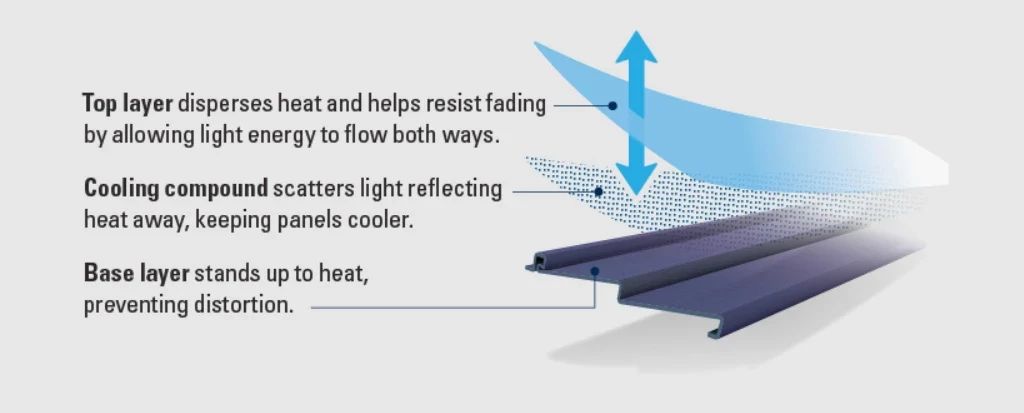
This graphic from Mastic shows how their siding disperses heat and light.
Consideration 2: How Long Do Fiber Cement and Vinyl Siding Last?
James Hardie: Update Your Home for Life with a Strong Warranty
If you are going to invest a good deal of money into your house, you want to be sure that it lasts for a long time. When properly installed, James Hardie fiber cement siding is a decision that will last you a lifetime.
James Hardie siding can last on a home for 50 years with minimal maintenance while continuing to look and perform great. You will save time and money by not having to repaint every seven years or check for damage from woodpeckers and termites.
James Hardie offers a 30-year non-prorated transferable warranty on their siding. This means that if you sell the house after 10 years, the remainder of the warranty will transfer to the new homeowner.
Contractors will often offer an additional warranty to the manufacturer’s coverage. At Kansas City and Windows, we offer a lifetime labor warranty on all our siding installations. This leaves you covered on both the material and the labor. Make sure to ask any potential siding contractor you talk to about what kind of warranty they offer!
Vinyl: A Long-term Solution for Some, Not Others
High-quality vinyl and polymer siding options will provide longevity. Vinyl siding can also last for up to 50 years on your house when you go with a quality manufacturer and contractor.
But keep in mind that not all vinyl or polymer siding will last this long. A general search shows that on average, vinyl siding lasts from 20-40 years depending on multiple factors. The more extreme the weather conditions where you live, the amount of sun, and the quality of the siding can all affect how long vinyl siding will last.
The warranty offered on your vinyl or polymer siding will vary depending on the manufacturer and the team who installs your siding. Mastic offers a lifetime non-prorated transferable warranty for their siding installed by Kansas City Siding and Windows. This warranty applies not only to manufacturer defects but also hail and fading. (So if you’re in a hailstorm and your siding is damaged, this warranty applies!)
Kansas City Siding and Windows is the only contractor in the Midwest who has been given a “double lifetime warranty.” Which means if you sell your home down the road, the new homeowner will enjoy the same lifetime warranty on the original siding purchase.
As you can tell, the longevity and protection of your vinyl or polymer siding can vary widely depending on several factors. So be sure to check details on the product, installation team, and manufacturer.
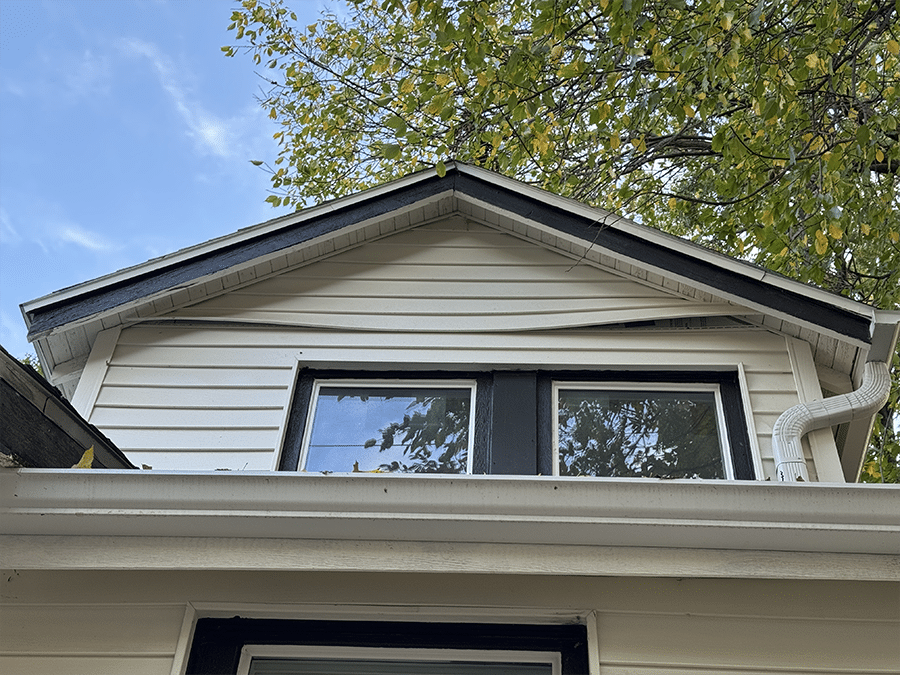
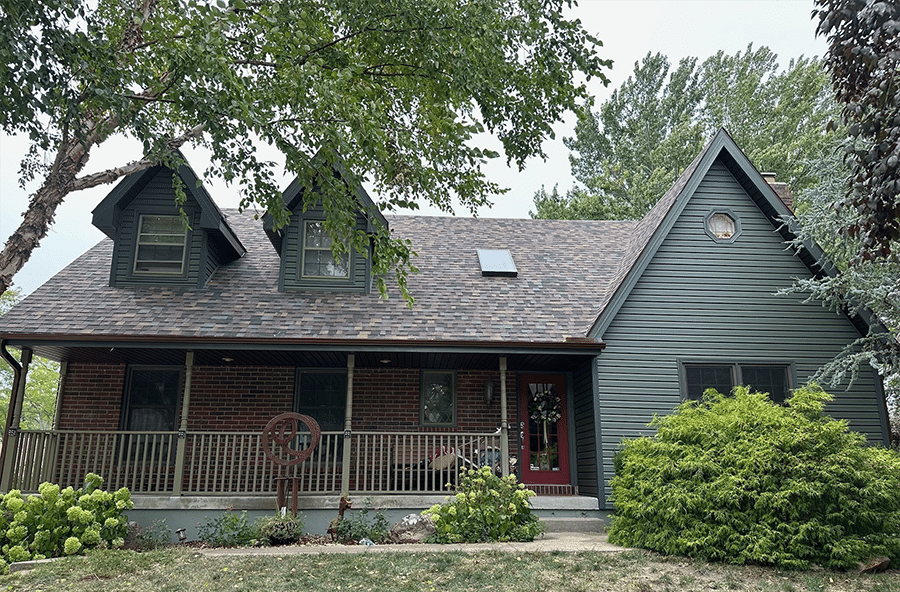
The vinyl siding on this house started warping only a few years after installation.
Consideration 3: How Much Do Fiber Cement and Vinyl Cost?
James Hardie: A Premium Product at a Reasonable Price
The perception of James Hardie fiber cement siding can be that the cost is prohibitive to install on your house. While it does cost more to install fiber cement on your home than it does to install vinyl, the cost is often more reasonable than people might assume.
Different factors can come into play with pricing James Hardie siding, like the type and style of siding you choose, so be aware of that while making a decision. We often ask homeowners to balance the initial cost of fiber cement against other factors like the low cost of maintenance, the longevity and durability, and increased home value (more on that in a minute!).
Vinyl: Less Expense Upfront, But Consider the Long Game
If the most important factor for you is price, then installing vinyl or polymer siding on your home will cost less than other siding options. It’s one of the reasons that vinyl is such a popular siding choice for homeowners who are trying to update their houses on a budget.
Again, not all vinyl siding offerings will cost the same. We think the least expensive options available are not a good value add for your home, which is why we don’t install them. Vinyl or polymer siding from a manufacturer like Mastic will cost more than other kinds of vinyl, but will cost less than options like fiber cement or wood.
Consideration 4: Do Fiber Cement or Vinyl Increase Curb Appeal?
James Hardie: Strong Colors with a Wood Grain Finish
In addition to all the other factors that make fiber cement a strong siding choice for your home, it also boasts increased curb appeal.
James Hardie siding has a natural looking wood grain finish and their Signature Collection comes with more than 20 colors to choose from that make for an attractive final look. Some homeowners prefer the look of a wood siding more than anything else, and James Hardie siding is as close as you can get to a wood finish without having wood siding on your home.
Colors are fade resistant and keep your home looking appealing for years to come.
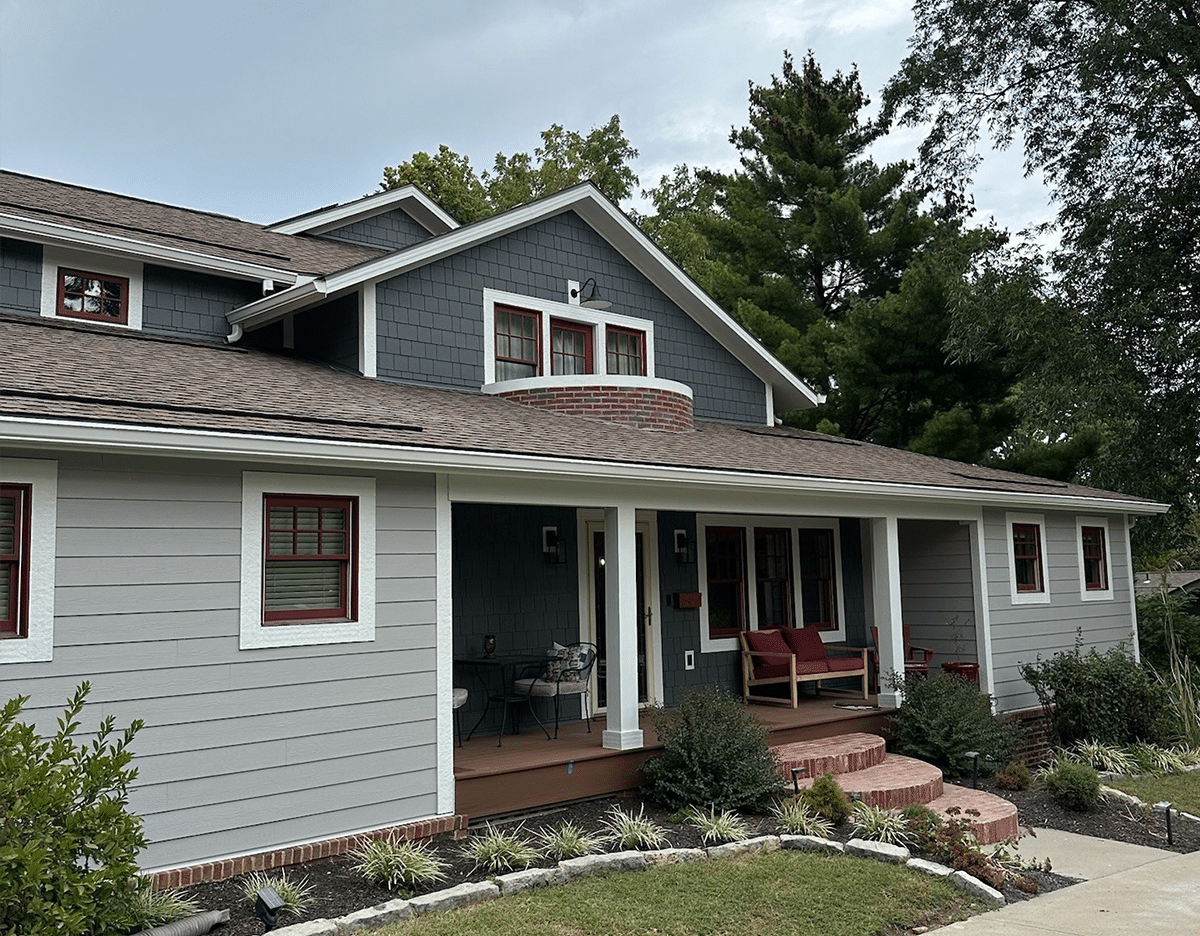
This home shows off Hardie siding product types including the plank lap and shingle siding options.
Vinyl: The Better the Quality, the Better the Aesthetic
Vinyl and polymer siding often has a bad rap when it comes to how a home looks. Lower quality products and poor installation can make a home look worse in comparison. Or, even if the finish looks good initially, deterioration means problems only a few years down the line.
Some vinyl manufacturers, like Mastic, offer products with texture to more strongly mimic wood siding and make the overall look more appealing. Added stabilizers and emulsifiers that help the siding stand up to UV also help to prevent color from fading as quickly.
There are people who will claim that even higher quality vinyl siding is immediately recognizable as vinyl. For homeowners with a strong preference on the aesthetic of their home, vinyl or polymer siding might not be the right choice.
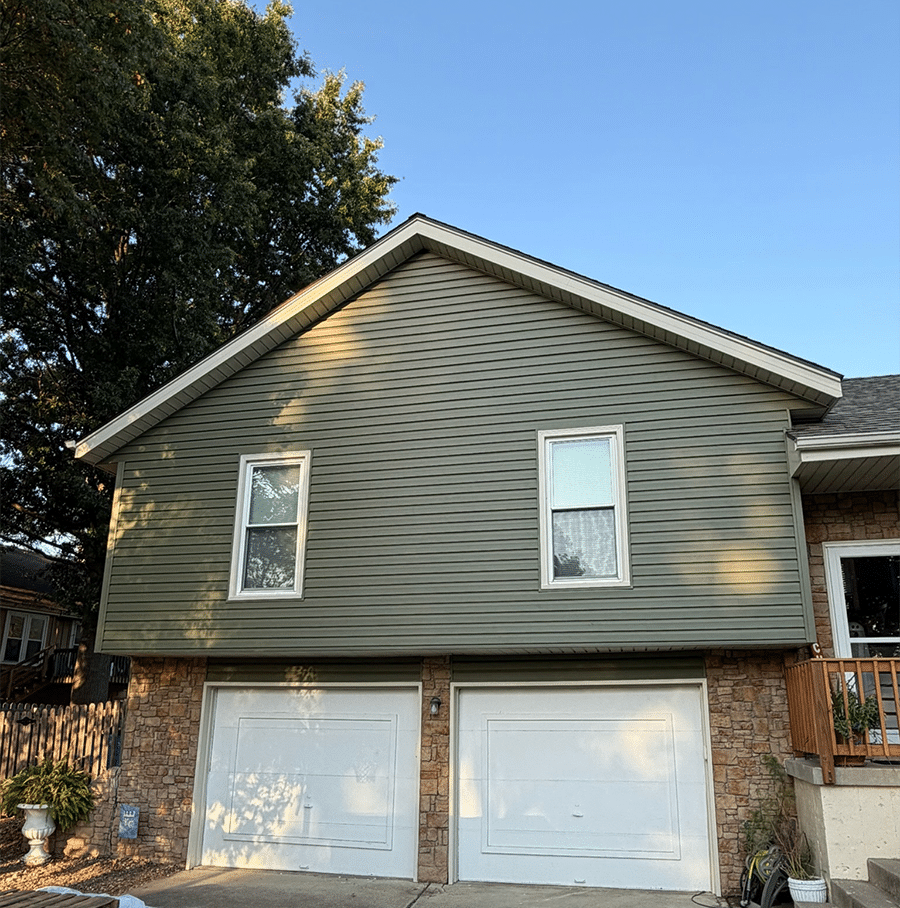
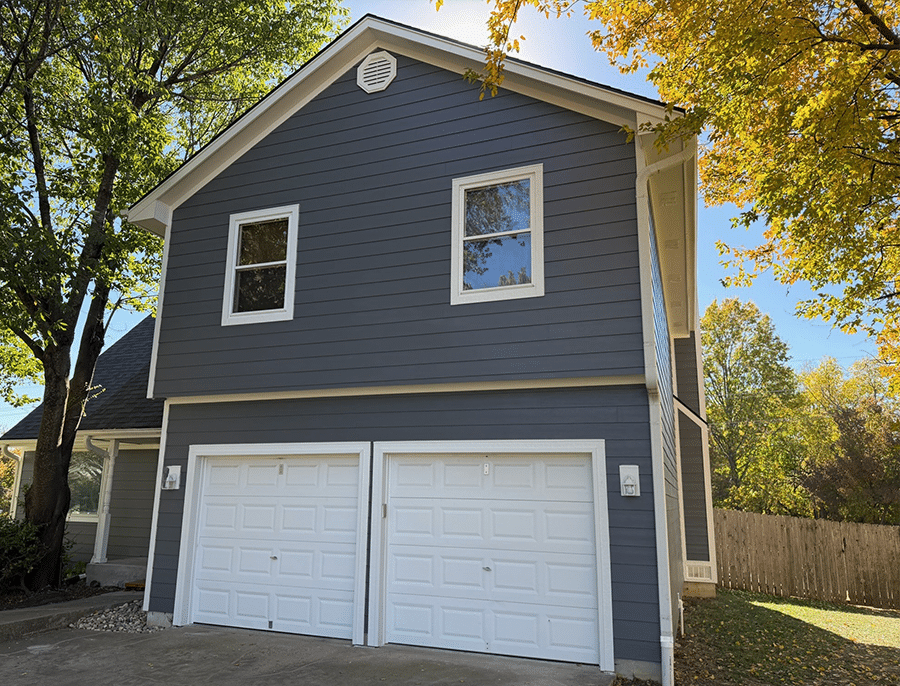
This polymer siding job from 2025 shows off color and style.
Consideration 5: Does Fiber Cement or Vinyl Increase the Value of My Home?
James Hardie: Increases Your Home’s Value Close to Installation Cost
Making improvements to your home will increase its value, and new siding is no exception. Fiber cement siding because of its durability, longevity, and curb appeal, adds a lot of additional value to your home.
According to the 2024 Cost vs. Value report, homes in the Midwest that installed new fiber cement siding saw a 90% average return on their investment. This means that the value of their homes increased by an amount that was equal to 90% the cost of the siding installation.
The increase in value as compared to the cost can vary by region, but this strong performance in the Kansas City area gives another reason why it’s such a good choice for homes in this area.
Vinyl: Increases Your Home’s Value to a Lesser Extent
Installing new vinyl siding on your home will also increase its value, just not quite as much as fiber cement.
The return on spend for vinyl siding is at an average of 69% for houses in the Kansas City area. This still shows a strong improvement in home value, and doesn’t bother some homeowners.
What matters is what’s important to you. Do you go for less increased value for your home balanced against a lower installed cost? Or, do you want to invest more for fiber cement and see a higher return on the value of your home?
Making the Final Choice on Vinyl or Fiber Cement Siding for Your Home
At Kansas City Siding and Windows, we only install siding that we believe is a valuable addition to your home. When you speak with other contractors, ask questions about who produces their siding and what value it offers. Not all vinyl siding is created equal, and going to extremes to save money initially can cost you more in the long run.
Pro Tip: Your Siding Material is Only as Good as the Quality of the Installation
On many of the homes that we work on, our teams see issues caused by poor installation that could have been avoided with knowledgeable installers. Even the best fiber cement can be installed incorrectly and cause you problems down the road. Make sure to ask questions and check your contractor’s credentials and licenses before signing on to a project!
If you are interested in either fiber cement or vinyl siding for your home, or you have more questions, please feel free to reach out. Or, if you’d like to talk to someone about specifics for your home, schedule a free in-home consultation to learn about the options we offer.
SEARCHING FOR THE RIGHT SIDING?
Fill out this form to schedule a free in-home consultation. We’ll work with you to make the best choice for your home.
"*" indicates required fields